

Most wholesale food distributors require a minimum order to do business. For large restaurant groups or hotel kitchens ordering in volume, that’s rarely a problem. For independent restaurants, smaller catering operations, or new food businesses in New York City, minimum order requirements create a real operational challenge — one that often pushes them toward retail pricing or forces over-ordering just to qualify for delivery.
This guide explains what no minimum order wholesale means in practice, why it matters for small and mid-size food businesses in NYC, and what to look for when choosing a wholesale food distributor that works with your operation — not against it.
What Does “No Minimum Order” Mean in Wholesale Food Distribution?
In wholesale food distribution, a minimum order requirement (MOQ) is the smallest order a distributor will accept and deliver. These minimums exist because distributors need to cover the cost of picking, packing, and delivering an order.
For large-scale operations, this isn’t an issue. For smaller businesses, MOQs create a mismatch: you need 10 pounds of protein, but the minimum is a 40-pound case. You need two cases of specialty produce, but the minimum spend is $300.
No minimum order wholesale means you can order exactly what your kitchen needs — no more, no less — and still receive the same next-day delivery and wholesale pricing as a larger account.
1. Cash flow pressure
Committing to a larger order than you need ties up working capital. In a business where margins are already tight, over-ordering to hit a minimum is money sitting in your walk-in instead of your account.
2. Food waste
Ordering more than you need increases spoilage risk, particularly for fresh produce, dairy, and proteins. Waste is a direct cost — and one that compounds when it happens regularly.
3. Menu rigidity
When you’re locked into case quantities, you tend to build menus around what you’ve already ordered rather than what’s fresh, seasonal, or what your guests actually want.
How No Minimum Orders Change Your Ordering Strategy
When minimum order requirements are removed, purchasing decisions shift from “what do I need to buy to qualify?” to “what does my kitchen actually need?”
This changes how operators approach their week:
- Order frequency increases. Instead of one large order every few days, many operators order smaller amounts more frequently — which keeps inventory fresh and reduces spoilage.
- Seasonal flexibility improves. You can test a new ingredient without committing to a full case. If it works, you order more. If it doesn’t, you haven’t wasted a full case.
- New businesses can start small. A restaurant in its first months doesn’t need to overcommit to a distributor relationship. No minimum orders allow new operators to scale purchasing as business grows.
What NYC Restaurants Can Order from Fadaro Without Minimums
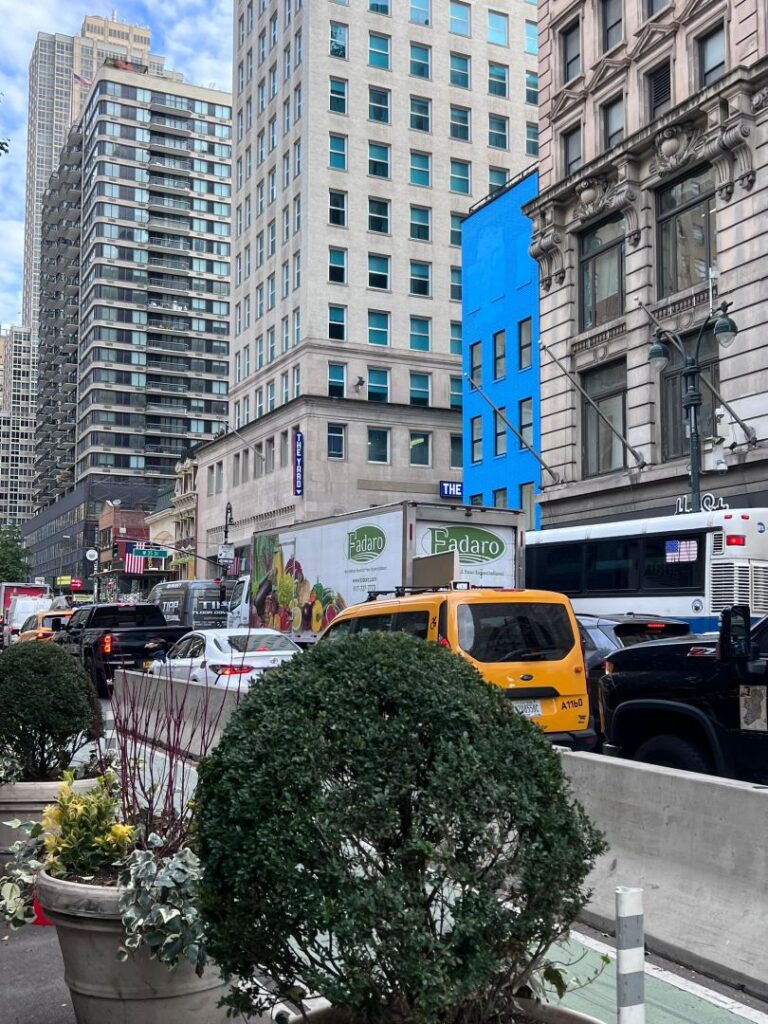
Fadaro Foods operates with no minimum order requirement across its full product range, delivered six days a week from the NYC Produce Terminal Market in the Bronx.
| Product Category | Examples |
|---|---|
| Fresh Produce | Fruits, vegetables, specialty and seasonal items |
| Meat & Poultry | Certified Angus Beef, Bell & Evans chicken |
| Dairy & Eggs | Milk, cheese, butter, cream, eggs |
| Frozen Foods | Ready-to-use proteins, vegetables, prepared items |
| Beverages | Water, juices, drink essentials |
| Pantry & Dry Goods | Oils, condiments, dry staples |
Orders placed before midnight are delivered the next morning — Monday through Saturday — across Manhattan, Brooklyn, Queens, the Bronx, and Bergen County, NJ.
How No Minimum Orders Reduce Food Waste in Professional Kitchens
Food waste is one of the most significant hidden costs in restaurant operations. The USDA estimates that food service businesses waste between 4% and 10% of food purchased before it ever reaches a guest.
Minimum order requirements contribute to this problem by forcing over-purchasing. When you order 40 pounds of a protein because that’s the minimum case size and you only needed 15, the remaining 25 pounds either gets used in dishes that weren’t planned, or it doesn’t get used at all.
No minimum order wholesale purchasing aligns what you buy with what you actually use. Over time, this reduces spoilage, tightens inventory management, and improves food cost percentage — one of the most important metrics in restaurant financial performance.
No Minimum Orders vs. Minimum Order Requirements: A Direct Comparison
| Factor | With Minimum Order Requirement | With No Minimum Order |
|---|---|---|
| Order size | Must meet distributor threshold | Order exactly what you need |
| Cash flow | Capital tied up in excess inventory | Purchase aligned with actual need |
| Food waste | Higher risk from over-ordering | Lower waste, better inventory control |
| Menu flexibility | Built around committed case quantities | Built around fresh availability |
| New business access | Higher barrier to entry | Start small, scale as you grow |
| Ordering frequency | Less frequent, larger orders | More frequent, smaller orders possible |
Is No Minimum Order Wholesale Right for Your Restaurant?
No minimum order wholesale purchasing tends to work well for:
- Independent restaurants that need flexibility without committing to large case quantities
- New food businesses that are still calibrating purchasing volume
- Catering companies with variable event sizes and fluctuating ingredient needs
- Ghost kitchens and delivery-first operations that optimize for cost efficiency
- Small commissaries that prepare food for multiple concepts and need precise ingredient control
What to Look for in a No Minimum Order Wholesale Food Distributor in NYC
Not all distributors that advertise no minimum orders deliver the same level of service. When evaluating a wholesale food supplier in New York City, consider:
- Delivery coverage. Does the distributor serve your specific borough and neighborhood?
- Order cutoff times. A midnight cutoff for next-day delivery gives you flexibility to adjust orders based on actual service volume.
- Product range. A distributor that covers produce, protein, dairy, frozen, and pantry from one account simplifies ordering.
- Delivery days. Six-day delivery coverage — Monday through Saturday — matters for kitchens that operate through the weekend.
- Account setup process. A straightforward credit application and quick approval process matters when you need a new supplier fast.
FAQ: No Minimum Order Wholesale Food in NYC
What is a no minimum order wholesale food distributor?
A wholesale food distributor that accepts and delivers orders of any size — without requiring a minimum spend or minimum case quantity to qualify for delivery.
Can small restaurants use wholesale food distributors in NYC?
Yes. Wholesale food distributors with no minimum order requirements serve restaurants of all sizes, from single-location independents to larger multi-unit operations.
How do I open a wholesale account with no minimum order in NYC?
Most wholesale food distributors in NYC require a credit application to open a business account. The process typically takes a few business days. Once approved, you can place orders through an online ordering system or by phone.
What products can I order without a minimum from a NYC wholesale food distributor?
Fadaro Foods offers no minimum orders across its full product range — fresh produce, meat and poultry, dairy, frozen foods, beverages, and pantry staples — delivered six days a week across NYC and Bergen County, NJ.
Fadaro Foods delivers wholesale food to NYC restaurants and commercial kitchens with no minimum order requirements. Orders placed before midnight arrive the next morning — Monday through Saturday — across Manhattan, Brooklyn, Queens, the Bronx, and Bergen County, NJ.